Part 6 of the free Linux for DevOps course: why you should never log in as root, why every user is really a number, how to create a user with useradd, set its password with passwd, add it to groups with usermod -aG, read the user database in /etc/passwd and /etc/group, and run a command as anyone with sudo -u.
Part 5 of the free Linux for DevOps course: count lines with wc, group and count duplicates with sort and uniq, cut a slice out of a huge file with sed, pull columns and sums out of text with awk, and chain them all together with the pipe to turn 200,000 log lines into one clean answer.
Part 4 of the free Linux for DevOps course: create a file with touch, edit it in nano and actually get back out, print it with cat, read just the top or bottom with head and tail, add lines with >>, and find the one line that matters with grep.
Part 3 of the free Linux for DevOps course: the map of a Linux system — what /etc, /var and /home are really for — plus pwd, ls -la, cd, mkdir -p, touch, cp, mv, rm, find and head/tail, with the mistakes that catch every beginner.
Part 2 of the free Linux for DevOps course: what Linux actually is, the difference between a kernel and a distro, why cloud VMs, containers, CI runners and Kubernetes nodes are all Linux, how you reach a server with SSH, and the three commands to run on any machine you've never seen.
Part 1 of the free Linux for DevOps course: why more than 9 out of 10 cloud servers run Linux, what kernel, distro and shell really mean, how to install Ubuntu on Windows (WSL) or Mac (Multipass) in five minutes, and your first commands — plus the full 18-lesson roadmap.
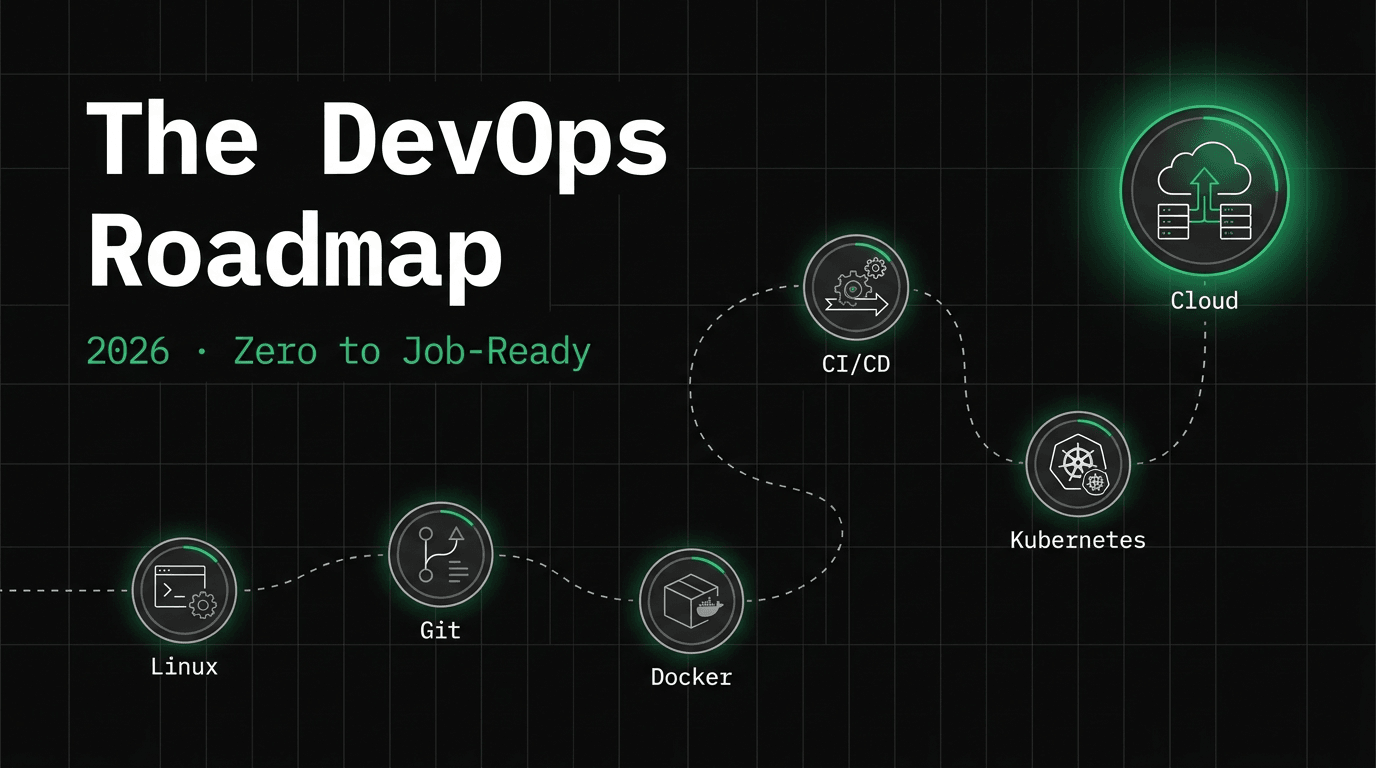
The exact order to learn DevOps in 2026 — Linux, Git, Docker, CI/CD, cloud, Terraform, Kubernetes, and monitoring — and the mistakes that keep beginners stuck.
 Muhammad Rashid12 min read